This section explains what inflammatory bowel disease (IBD) is, how Crohn's disease and ulcerative colitis can differ, and what we know about IBD in the Gulf — a foundation for better conversations with your care team.
01
What is IBD?
Understand the basics of inflammatory bowel disease and why it happens.
02
Crohn's & UC
Explore the two main types of IBD and how they can be different.
03
IBD in the Gulf
Look at IBD in our region — what the data shows and what factors may play a role.
01 · Understand
What is IBD?
Inflammatory bowel disease (IBD) is a long-term condition in which the body's immune system causes inflammation in the digestive tract.
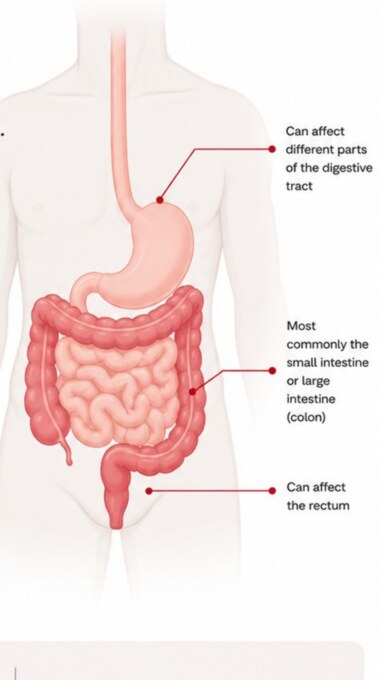
IBD can affect different parts of the digestive tract — most often the small intestine, colon, or both.
Where it happens
IBD can affect different parts of the digestive tract — most commonly the small intestine, large intestine (colon), or both.
What inflammation means
Inflammation can cause symptoms such as abdominal pain, diarrhoea, and fatigue. Symptoms can come and go, and may vary from person to person.
Why it matters
Understanding IBD is the first step to managing your condition and working with your care team to improve your quality of life.
Key takeaway
IBD is a chronic condition, but with the right information and support, many people find ways to manage it and live meaningful lives.
Talk with your healthcare professional
They can help you understand your condition and answer any questions you may have.
01 · Understand
IBD is not IBS
IBD and IBS can cause digestive symptoms, but they are different conditions. Understanding the difference can help you have clearer conversations with your care team.
IBD — Inflammatory Bowel Disease
Inflammation — IBD involves inflammation in the digestive tract.
Long-term condition — a chronic condition that can cause flare-ups and periods of remission.
Potential complications — can lead to complications if not properly managed.
May need medical treatment — often requires medications and ongoing care.
Needs specialist care — managed by a gastroenterologist or IBD care team.
IBS — Irritable Bowel Syndrome
No inflammation — IBS does not cause inflammation in the digestive tract.
Long-term functional disorder — affects how the intestines work, not their structure.
Does not cause complications — not linked to inflammation-related complications.
Managed with lifestyle changes — diet, stress management, and other strategies.
Managed in primary care — usually with or without specialist input.
Important to know
Only a healthcare professional can diagnose the cause of your symptoms and recommend the right next steps for you.
Talk with your healthcare professional
If you're unsure whether your symptoms point to IBD or IBS, your care team can guide testing and diagnosis.
02 · Understand
Crohn's disease and ulcerative colitis
IBD includes two main types. They can affect different parts of the digestive tract.
Crohn's disease
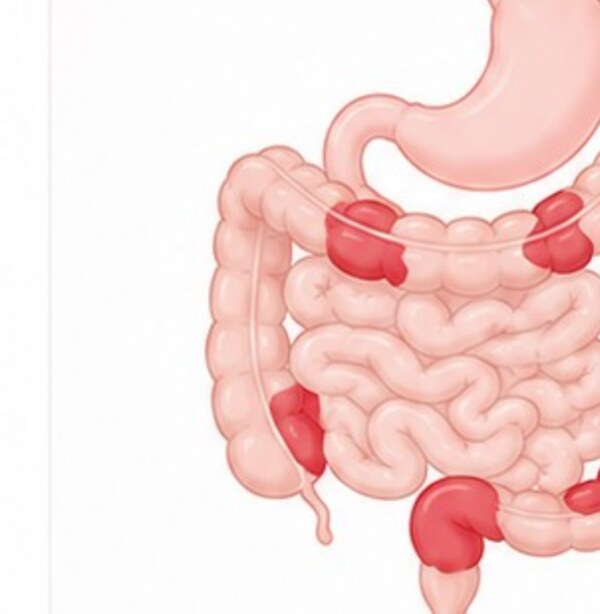
Crohn's disease can affect any part of the digestive tract, from the mouth to the anus.
Can affect the small intestine, colon, or both.
Inflammation occurs in patches.
Can involve deeper layers of the bowel wall.
Ulcerative colitis
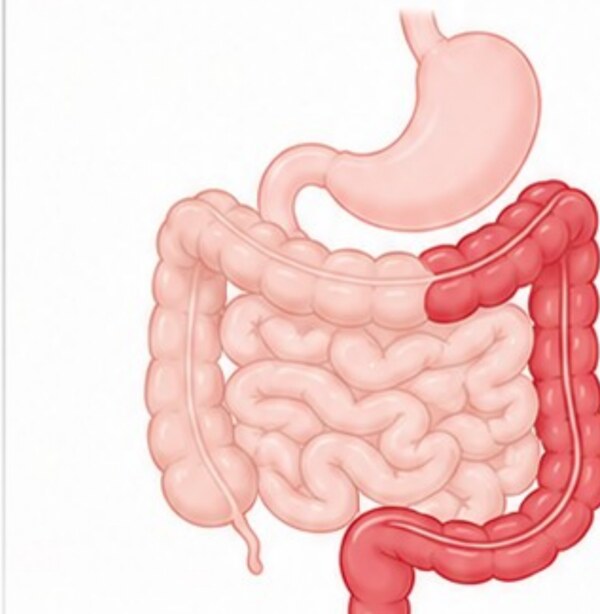
Ulcerative colitis only affects the large intestine (colon) and rectum.
Affects the colon and rectum only.
Inflammation is continuous.
Typically affects the inner layer of the bowel.
"Crohn's disease is unpredictable — but it is not unmanageable."
Crohn's disease behaviour patterns
Behaviour pattern
What it means
B1 — Inflammatory
Inflammation only, with no structural damage yet.
B2 — Stricturing
Scar tissue narrows the bowel.
B3 — Penetrating
Inflammation creates fistulas or abscesses.
Important to know
Both are long-term (chronic) conditions. Understanding the difference can help you have clearer conversations with your care team.
Talk with your healthcare professional
They can help answer your questions and guide your next steps.
03 · Understand
IBD in the Gulf
IBD affects people and families across the Gulf. Greater awareness can help people recognise ongoing symptoms and have timely conversations with their healthcare professional.
Awareness is growing
More people are talking about IBD and long-term digestive symptoms. Awareness can help reduce delays in seeking support.
Symptoms can affect daily life
IBD may impact school, work, family life, travel, and overall wellbeing. Everyone's experience can be different.
Early conversations matter
If symptoms continue or change, speaking with a healthcare professional can help guide the next steps.
Important to know
Only a healthcare professional can assess symptoms, request tests, and explain what they may mean.
Talk with your healthcare professional
Bring up any ongoing symptoms — they can help you understand your options.
This guide is for educational purposes only and does not replace medical advice. Always talk with your healthcare professional about your condition and treatment.